From Being Present to Being Heard: MYCP at the IMRF 2026
The International Migration Review Forum (IMRF) 2026 gave us a space to bring the voices and experiences of children and young people into global conversations on migration. For MYCP, it was also a moment to reflect on what it really means to participate in spaces where decisions about our lives are being made.
Ten young people from across the MYCP network joined the Forum, carrying with them different experiences of migration, movement and belonging. Throughout the week, MYCP contributed to more than 10 high-level sessions and side events, connecting with Member States, UN agencies, civil society organisations and other actors working to shape migration policy.
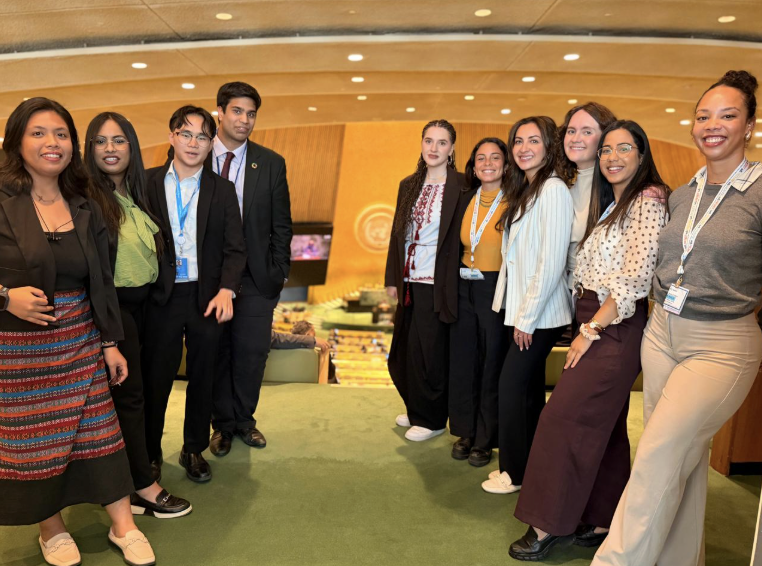
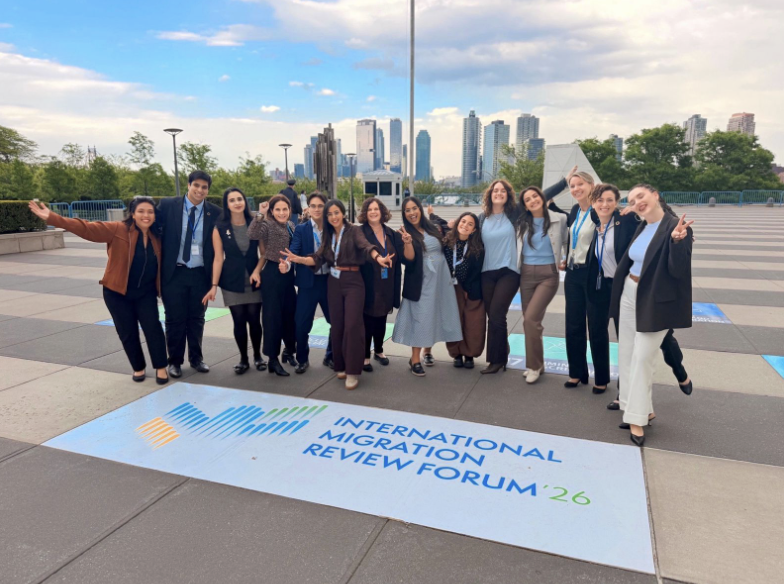
But for us, the significance of the IMRF was not only in being present.
It was in asking what happens when young people are invited into a room — and whether they are truly able to shape what happens inside it.
Participation is more than a seat at the table.
One of our strongest reflections from the IMRF was that meaningful youth participation cannot begin and end with being invited into the room.
Young people carry knowledge that comes from lived experience, from communities, from movement across borders and from navigating systems that are often designed without them in mind. That knowledge matters. But for it to matter in policy spaces, young people need opportunities to shape conversations from the beginning — not only respond to decisions that have already been made.
At different moments, the IMRF process felt difficult to navigate and relatively closed to youth and civil society. While there were spaces for participation, it was not always clear how youth contributions connected to the wider process or how they would shape the outcomes that followed.
This reminded us that participation is also about power.
Who gets to speak?
Who gets heard?
Whose knowledge is considered legitimate?
And who gets to remain part of the conversation when the meeting is over?
For MYCP, meaningful participation means creating pathways for young people to be involved across the policy cycle — from agenda-setting and decision-making to implementation, monitoring and accountability.
Turning lived experience into commitments
Our presence at the IMRF also showed what becomes possible when young people are treated as partners rather than simply as beneficiaries of policy.
Together with partners across civil society, UN agencies and Member States, MYCP contributed to language that was reflected in 5+ provisions of the IMRF 2026 Progress Declaration.
These included commitments around:
ending child immigration detention and advancing child-sensitive alternatives to detention;
recognising the physical and mental health needs of migrants;
strengthening family reunification pathways;
recognising migrant skills, qualifications and competencies; and
improving disaggregated migration data so that children and young people are not made invisible in policy and evidence.
These commitments matter because policy is never simply words on a page. Behind every paragraph are people whose lives are shaped by whether those commitments are implemented.
What still needs to be heard?
The conversations at the IMRF also reminded us of the gaps that remain.
Education continues to deserve greater attention in migration discussions, particularly when we think about the futures of children and young people on the move.
Data emerged as a major priority. If children and young people remain invisible in migration statistics, their realities can also remain invisible in policy. MYCP sees an opportunity to continue contributing to this work through youth-led research, policy analysis and knowledge-sharing.
Alternatives to detention also require stronger and more connected advocacy. Different regions and organisations often speak about detention in different ways. We need stronger shared language rooted in children's rights and human dignity.
We also saw the need to make gender and diaspora perspectives more visible. The experiences of vulnerable diaspora communities were not always present in the conversations, reminding us that migration is experienced differently depending on who we are, where we come from and the systems of power that shape our lives.
And as digital technology and AI increasingly shape migration governance, we need to ask not only what these technologies can make possible, but also who they serve, who might be excluded, and what new risks they may create.
What happens after the Forum matters most.
Perhaps the most important lesson we carry from the IMRF is that participation does not end when the meeting ends.
The Progress Declaration is a beginning, not an endpoint. The real work is in what happens afterwards: whether commitments are followed, whether governments and institutions are held accountable, and whether young people continue to have a place in shaping implementation.
For MYCP, this means using our regional constituencies and youth networks to bring the conversations home to the communities and contexts where migration is lived every day.
In the Asia-Pacific region, we see opportunities to track and analyse commitments, document good practices from a youth perspective, strengthen policy conversations around data, detention, diaspora and education, and support more meaningful youth engagement in GCM implementation.
The relationships built at the IMRF also give us an opportunity to continue working with governments, UN agencies, civil society and research institutions that are committed to strengthening youth participation.
Because the question is not simply whether young people are invited to the table.
It is whether the table itself is changing.
Whether there is room for different ways of knowing.
Whether participation can become partnership.
And whether the decisions made in global rooms can ultimately be felt in the everyday lives of children and young people on the move.