“Are You Doing Okay?” The Question We Forget to Ask Migrant Workers
(Op-Ed) by Natalie Wei, Taipei European School
“Are you doing okay?”
It seems like a simple question.
But when I asked this question to migrant caregivers in Taipei, I realized how rarely they were given the chance to answer it.
Many of the women sitting in front of me were Indonesian and Filipino caregivers who spent their days caring for elderly people in Taiwanese households. They helped others eat, bathe, move, and complete everyday activities that many families could not manage alone. Their work was physically demanding and emotionally exhausting.
Yet when the conversation turned toward themselves, many hesitated.
Not because they had nothing to say.
Because they were not used to being asked.
Since the summer of 2024, I have volunteered with a migrant worker support organization in Taipei, assisting psychologists and volunteers during biweekly peer-support meetings for female migrant caregivers. At first, I thought my role was mainly to translate words between English and Chinese. But I soon learned that the deeper challenge was translating experiences — helping people express feelings that had remained unspoken for years.
Through these conversations, I began to understand that migration is not only about crossing borders. It is also about carrying invisible struggles into a new country.
Many caregivers shared similar experiences: disrupted sleep, overwhelming responsibilities, and loneliness. Unlike many workers who leave their workplace after their shifts end, live-in caregivers often remain responsible for the people they care for throughout the day and night. Even when they sleep, they must stay alert in case an emergency occurs.
For some, exhaustion came not only from physical demands but from emotional distance. Many had left behind their children, spouses, and parents in their home countries. They supported their families financially from afar, yet often had no one nearby to support them emotionally.
Before volunteering, I often thought about migration through visible changes: people arriving in a new country, finding employment, and building new lives.
But I gradually realized that migration is not only about where people go.
It is also about what they leave behind.
For many migrant caregivers, leaving home means missing birthdays, family gatherings, and ordinary moments that cannot be recreated. It means watching their children grow up through phone screens, hearing about their parents’ health from thousands of miles away, and becoming both present and absent in the lives of the people they love.
They leave behind not only familiar places, but familiar versions of themselves.
In Taiwan, they become caregivers, workers, and providers. Yet behind those roles are individuals who once had their own routines, communities, and dreams. Many came here because they wanted to build a better future for their families. Their sacrifices are often invisible precisely because they are successful at carrying them.
This was the part of migration I had overlooked.
I had understood movement as a physical journey — a person leaving one country and arriving in another. But through these conversations, I began to see migration as an emotional journey as well. It is the experience of rebuilding a life while carrying memories of the one left behind.
And when someone carries that much alone, even a simple question like “Are you doing okay?” can become surprisingly difficult to answer.
Listening to these stories changed the way I understood support. I realized that helping migrant workers was not only about providing services after problems appeared. It was about creating spaces where people could acknowledge their struggles before they became invisible.
That realization led our team to ask a new question: How could we turn these conversations into meaningful support?
Last year, our team began developing a mental health education program specifically designed around the experiences shared by migrant caregivers. Rather than assuming what migrant workers needed, we started with what they had already told us: the stress of long working hours, the difficulty of communicating across cultures, and the emotional burden of being separated from their families.
We worked with healthcare professionals to develop educational materials and workshops covering mental health, caregiving skills, and strategies for managing stress. Our goal was not to “fix” migrant workers’ challenges through a short program — many of their difficulties were rooted in larger issues such as working conditions and social isolation. Instead, we hoped to provide something often missing from their migration journeys: knowledge, connection, and a reminder that their well-being mattered.
But we also wanted to know whether our efforts created a real difference.
To evaluate the program, our team collaborated with medical professionals and used both psychological questionnaires and heart rate variability (HRV) measurements, a physiological indicator related to stress regulation. We compared migrant caregivers who participated in the workshops with those who did not, hoping to understand whether the program could improve not only how participants felt, but also how their bodies responded to stress.
The results revealed an important lesson.
While traditional self-reported questionnaires did not show significant differences between groups, HRV measurements suggested that participants experienced changes in physiological stress responses. This contrast reminded us that emotional struggles are not always visible. Some people may hesitate to describe themselves as exhausted, anxious, or overwhelmed — not because they are unaffected, but because they have learned to endure silently.
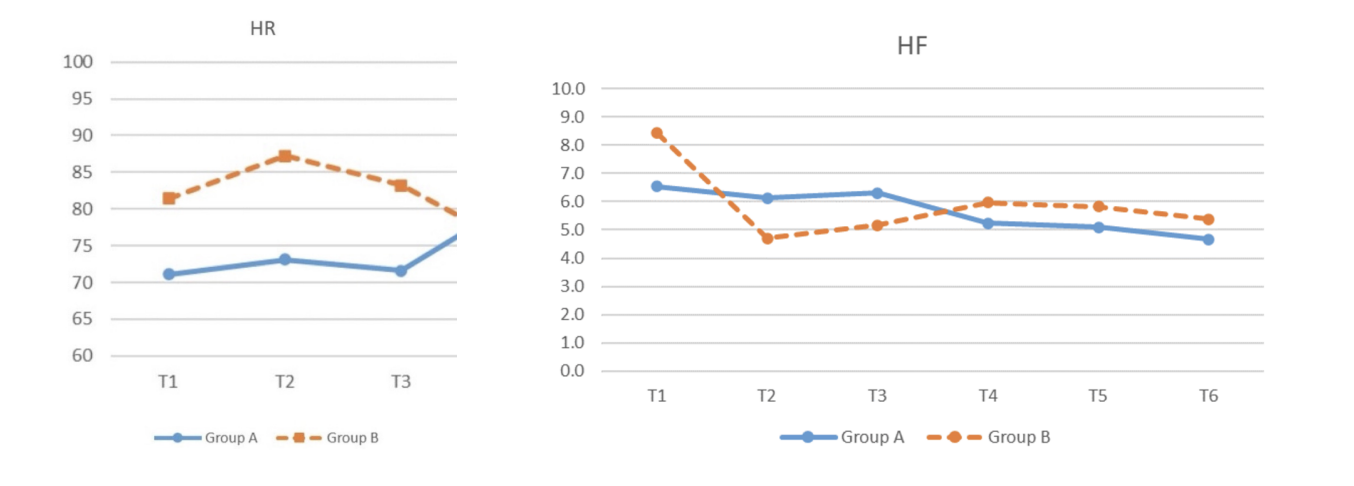
Fig: Results of heart rate and parasympathetic nerve activity measurements
For migrant workers, this silence can be especially powerful.
Many leave their homes because they want to create better opportunities for their families. They arrive with determination and resilience, often adapting to unfamiliar languages, cultures, and workplaces. But resilience should not mean that society expects people to withstand hardship without support.
A society that depends on migrant workers’ care must also care for migrant workers.
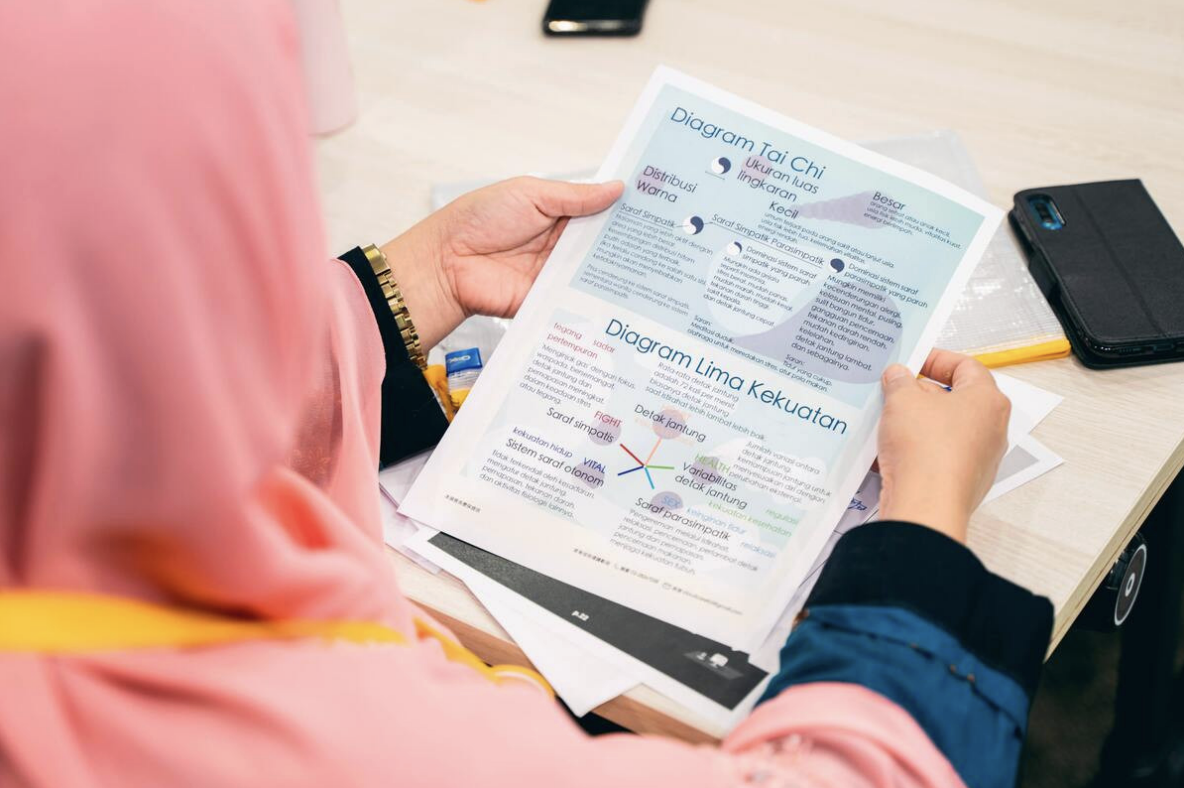
Fig: Individualized result report
This does not mean viewing migrants only as vulnerable people who need help. The women I met were not defined by their difficulties. They were mothers, daughters, professionals, and individuals with dreams beyond their jobs. They showed incredible strength in navigating life between countries and cultures.
But strength and support are not opposites.
Even the strongest people need someone to listen.
Migration is often discussed through numbers: how many workers arrive, how much labor they contribute, or how they affect economies. These conversations are important, but they can sometimes make people disappear behind statistics.
My experience with migrant caregivers taught me that every migration story is ultimately a human story.
Behind every caregiver helping an elderly person walk down the street is someone who may miss their family thousands of miles away.
Behind every worker supporting another household is someone who also needs support.
The next time we encounter a migrant worker, perhaps we should look beyond the work they provide and remember the person behind it.
And perhaps begin with the simplest question:
“Are you doing okay?”
(Op-Ed) by Natalie Wei, Taipei European School